Ranking on Google used to feel relatively simple. Publish enough blog posts, add a few keywords, build some backlinks, and eventually traffic would start showing up. For many SaaS companies, that strategy worked for years. Today, things are different. The B2B SaaS market is far more competitive than it was even five years ago. Almost …
How B2B SaaS Companies Can Rank Faster on Google
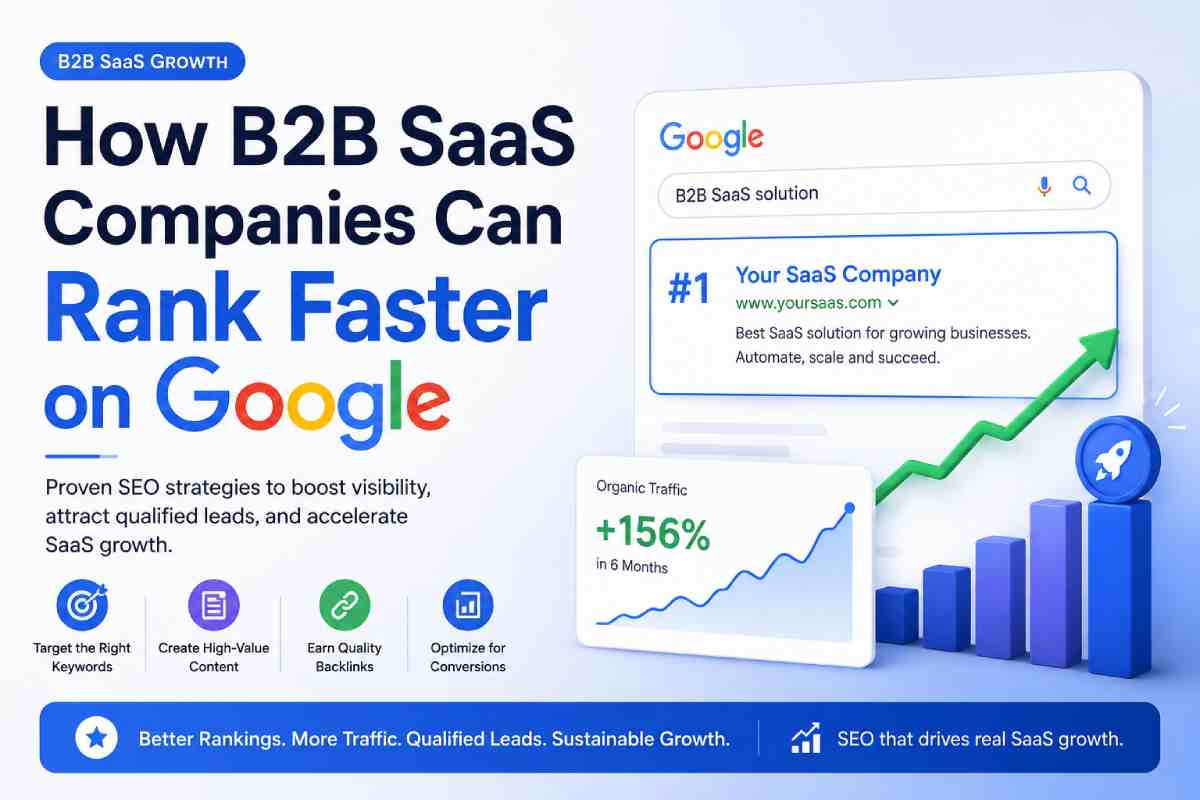
Ranking on Google used to feel relatively simple. Publish enough blog posts, add a few keywords, build some backlinks, and eventually traffic would start showing up. For many SaaS companies, that strategy worked for years.
Today, things are different.
The B2B SaaS market is far more competitive than it was even five years ago. Almost every category is crowded with startups, enterprise platforms, and heavily funded competitors all fighting for the same search visibility. At the same time, Google has become much better at identifying shallow content and rewarding websites that demonstrate real expertise.
That creates a frustrating situation for many SaaS companies. They invest months into content production but see very little movement in rankings. Meanwhile, competitors continue dominating search results.
The reality is that ranking faster on Google now requires a more focused and strategic approach. It is no longer about publishing the highest volume of content. It is about creating the right pages, targeting the right intent, and building authority in a way that compounds over time.
The good news is that B2B SaaS companies still have major advantages when it comes to SEO. They often operate in specialized niches, solve specific business problems, and have access to deep industry expertise. When used correctly, those strengths can accelerate rankings much faster than most teams realize.
Start With Buyer Intent, Not Traffic Volume
One of the biggest mistakes SaaS companies make is targeting keywords simply because they have high search volume.
At first glance, this seems logical. More searches should mean more traffic. But high-volume keywords are often extremely competitive and surprisingly low in conversion potential.
For example, a broad keyword like “project management” may attract massive traffic, but ranking for it could take years. Even worse, many of those searchers may not actually be looking to buy software.
Faster SEO growth usually comes from targeting highly specific searches with strong intent behind them.
Searches like:
- “project management software for remote teams”
- “best CRM for financial advisors”
- “how to automate sales reporting”
- “HIPAA compliant scheduling software”
These searches reveal much more about what the user actually needs.
The competition is often lower, rankings happen faster, and conversion rates tend to be significantly higher.
The best B2B SaaS SEO strategies are usually built around intent-driven searches rather than vanity traffic goals.
Build Pages Around Problems, Not Just Keywords
Many SaaS companies still create content using an outdated process. They choose a keyword, write a generic article around it, and hope Google rewards the page.
But Google increasingly favors pages that genuinely solve problems.
That means the real goal should not be keyword insertion. It should be understanding what the searcher is trying to accomplish.
A person searching “how to improve customer onboarding” is not simply looking for a definition. They likely want:
- practical strategies,
- workflow examples,
- implementation advice,
- and potentially software solutions that make onboarding easier.
The pages that rank fastest are usually the ones that satisfy this deeper intent better than competitors do.
This is where domain expertise becomes a huge advantage for SaaS companies. Your team likely understands customer pain points far better than a generic content writer ever could.
Use that knowledge.
Create pages that answer real operational challenges. Include examples, frameworks, workflows, metrics, screenshots, and practical insights whenever possible.
Google rewards usefulness more than most people realize.
Prioritize Commercial Content Early
A lot of SaaS startups spend months publishing educational blog content before creating pages tied directly to buying intent.
That is often backwards.
While educational content matters, commercial pages usually have a much clearer path to revenue and rankings.
These include:
- comparison pages,
- alternative pages,
- feature pages,
- integration pages,
- industry-specific landing pages,
- and solution-focused content.
Searches like:
- “HubSpot alternatives”
- “best payroll software for startups”
- “Slack integration for CRM”
- “inventory management software for ecommerce”
are often extremely valuable because the buyer is already evaluating tools.
These pages tend to convert better and can produce ROI much faster than broad informational articles.
Many fast-growing SaaS brands quietly dominate these commercial searches long before they become well known companies.
Internal Linking Is Underrated
One of the easiest ways to improve rankings faster is through better internal linking.
Most SaaS websites are surprisingly poor at this.
They publish dozens or hundreds of pages but fail to connect them strategically. As a result, authority becomes fragmented across the site.
Strong internal linking helps Google understand:
- which pages are most important,
- how topics relate to each other,
- and where authority should flow.
For example, if a SaaS company has:
- a guide about customer retention,
- a page about onboarding automation,
- a churn reduction case study,
- and a feature page about lifecycle emails,
those pages should naturally connect together.
This creates topical depth, which Google increasingly values.
It also improves user experience because visitors can continue exploring related topics instead of leaving the site after reading one article.
Internal linking is not flashy, but it consistently helps rankings improve faster.
Backlinks Still Matter, But Quality Matters More
Despite constant debates about SEO trends, backlinks remain one of the strongest ranking factors in competitive B2B SaaS niches.
However, the type of backlinks matters enormously.
Buying large quantities of low-quality links rarely works long term anymore. In many cases, it can hurt a website’s credibility.
The SaaS companies that rank fastest often earn links through:
- original research,
- data-driven content,
- thought leadership,
- product-led resources,
- and genuinely useful tools or templates.
For example, publishing benchmark reports, usage statistics, industry surveys, or proprietary data can attract natural links from journalists and bloggers.
This type of authority-building is much more sustainable than chasing spammy link packages.
Good backlinks do not just improve rankings. They reinforce brand credibility at the same time.
Technical SEO Cannot Be Ignored
Content alone will not overcome technical issues.
Many B2B SaaS sites struggle with:
- slow page speed,
- poor mobile optimization,
- broken links,
- duplicate pages,
- weak site architecture,
- and confusing navigation.
These issues create friction for both users and search engines.
Google increasingly prioritizes websites that provide clean, fast, and accessible experiences.
Improving technical SEO often produces faster gains than publishing additional content because it removes barriers preventing existing pages from performing well.
For SaaS companies with large websites, technical improvements can unlock significant ranking potential quickly.
Topical Authority Wins Long Term
One strong article is rarely enough to dominate competitive SaaS searches.
Google prefers websites that consistently demonstrate expertise across an entire topic area.
This is why topical authority matters.
Instead of publishing random disconnected articles, successful SaaS companies build clusters of related content around core business problems.
For example, a cybersecurity SaaS platform may build comprehensive coverage around:
- compliance,
- endpoint protection,
- cloud security,
- ransomware prevention,
- and risk management.
Over time, Google begins recognizing the site as an authority within that niche.
That trust accelerates future rankings.
New pages start indexing faster. Rankings improve more quickly. Organic traffic compounds.
This is where long-term SEO momentum comes from.
Patience Still Matters
Even though there are ways to rank faster, SEO is still a long game.
Many SaaS companies quit too early because they expect immediate results. But authority takes time to build, especially in competitive industries.
The companies that succeed usually treat SEO like a long-term investment rather than a quick growth hack.
They continuously improve content, update pages, strengthen internal linking, build authority, and refine strategy based on real user behavior.
Over time, the results become difficult for competitors to replicate.
The Companies That Win Search Usually Understand Their Audience Best
At its core, Google’s job is fairly simple. It wants to show users the pages most likely to solve their problems.
That means the SaaS companies that rank fastest are often not the ones gaming algorithms. They are the ones understanding customers most deeply.
When a company creates genuinely useful content aligned with buyer intent, supported by strong technical foundations and thoughtful authority-building, rankings tend to follow naturally.
This is why effective saas seo guidance should never focus only on keywords or traffic numbers. The bigger goal is building a website that consistently earns trust from both users and search engines.
That trust is what ultimately drives sustainable rankings, qualified leads, and long-term growth.
Dbusinesspractices
Saleena Begum shares expert insights on business growth, digital marketing, and profitability, helping entrepreneurs and professionals make smarter, data-driven decisions.